

Luxury Car Accessories
Protect Your Car’s Value with Authentic Luxury Parts | Dourado Auto Service
Aug
A luxury vehicle rarely gives a subtle warning when the wrong part is fitted. A parking sensor may trigger false alerts, an adaptive headlight may not communicate correctly with the vehicle, or a replacement trim piece may look acceptable until sunlight reveals a mismatch in color and finish. Luxury vehicle parts sourcing is therefore not simply a purchase decision. It is how you protect the precision engineering, visual refinement, and retained value of the vehicle you chose.
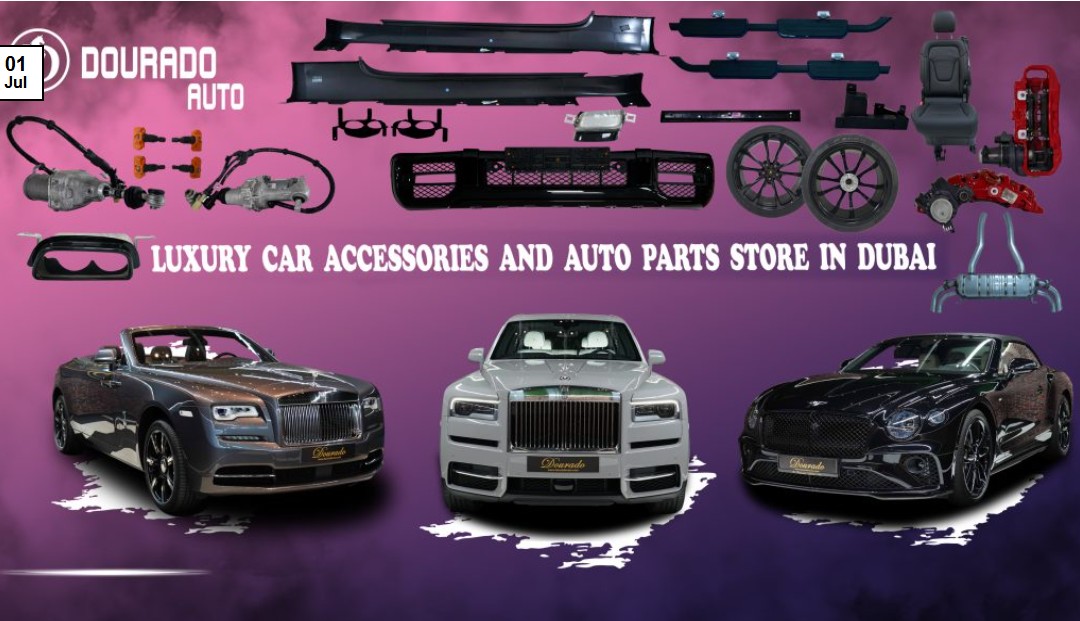
For owners of Bentley, Ferrari, Lamborghini, Land Rover, Mercedes-Benz, Rolls-Royce, and Tesla models, the standard should be clear: buy components that belong on the car. That means understanding fitment, confirming authenticity, and choosing a supplier that can provide answers before the part reaches your workshop. Visit Dubai’s leading car spare parts showroom for genuine & OEM parts across luxury, exotic & premium brands.
Why the Source Matters as Much as the Part
Premium vehicles are built as highly coordinated systems. A brake component affects more than stopping power. It can influence pedal feel, heat management, sensor operation, wheel clearance, and the driving confidence expected from the marque. A mirror assembly may include cameras, heating elements, motors, memory functions, signal lamps, and painted surfaces, all designed for a specific vehicle configuration.
Generic parts often appear attractive because of their price or immediate availability. The trade-off can be poor fitment, reduced durability, warning lights, inconsistent appearance, or added labor when a component has to be removed and replaced a second time. The cost of an incorrect part is not limited to the invoice. It can include workshop time, diagnostic work, vehicle downtime, and a compromised ownership experience.
Authentic parts also matter when it is time to sell, trade, or present a vehicle for inspection. Collectors and discerning buyers notice panel alignment, interior finishes, brake quality, and whether repairs have respected the vehicle’s original specification. Correct components help preserve the opulence and integrity that make a luxury vehicle desirable in the first place.
Luxury Vehicle Parts Sourcing Starts With Exact Identification
The most polished product photograph cannot confirm fitment. Before ordering, establish the vehicle’s exact identity through its VIN, model year, engine or powertrain, trim level, market specification, and available options. Two vehicles that appear identical can use different components because of production dates, regional equipment, performance packages, or a factory revision made during the model year.
Use the Part Number Whenever Possible
A manufacturer part number is the strongest starting point for a replacement. It helps distinguish between components that share a name but differ in dimensions, connectors, finishes, or software compatibility. This is especially valuable for electronic items such as control modules, headlamps, cameras, sensors, infotainment components, and Tesla-specific electrical parts.
Part numbers can also change. A discontinued number may be superseded by a newer version that fits the same application, while a visually similar number may be intended for an entirely different specification. Confirming that relationship before purchase prevents expensive guesswork.
Check Details That Are Easy to Miss
Fitment errors frequently come down to small details. A left-side and right-side body component, a short-wheelbase and long-wheelbase trim piece, or a wheel designed around a particular brake package can make all the difference. Exterior items require special attention to paint code, finish, and mounting hardware. Interior parts may vary by leather color, wood veneer, stitching, seat configuration, or steering-wheel control layout.
For a repair involving collision damage or multiple missing items, assess the full assembly rather than ordering one visible piece at a time. A bumper cover, for example, may require grilles, brackets, sensors, camera mounts, lower trims, reinforcement components, and fasteners. A complete view protects both fitment and final presentation.
Know the Difference Between Genuine, OEM, and Generic Parts
These labels are often used loosely, but luxury owners should expect clear definitions.
A genuine part is supplied through the vehicle manufacturer’s authorized channel and carries the manufacturer’s branding and specification. It is the direct choice when preserving factory originality is the priority.
An OEM part is produced by the Original Equipment Manufacturer or an approved supplier to the original standard. Depending on the part and its supply channel, it may carry the component maker’s branding rather than the vehicle manufacturer’s box. OEM components can be an intelligent choice when they are verified for the precise vehicle application and deliver the expected quality, performance, and fit.
Generic aftermarket parts are made by third parties and can range widely in quality. Some may suit a lower-risk application, but they demand greater scrutiny. On a luxury or exotic vehicle, the savings may not justify uncertainty around material quality, tolerances, electronics, finish, or long-term reliability.
Safety-critical and electronically integrated components deserve the least compromise. Brakes, suspension parts, steering components, lighting assemblies, cooling elements, exhaust sensors, and advanced driver-assistance equipment should be sourced with exceptional care. With exterior styling accessories or certain non-structural interior enhancements, the decision can be more flexible, provided the finish, installation method, and vehicle-specific compatibility have been confirmed.
Choose a Supplier That Can Verify, Not Just Sell
A quality supplier should make the process more confident, not more complicated. Look for a curated inventory focused on premium marques, genuine and OEM positioning, and a team willing to confirm part details before payment. The ability to speak with a real specialist is valuable when a customer has only a VIN, a photograph, or a description of a fault.
Ask direct questions: Is this part new and authentic? What vehicle specification does it fit? Has the part number been superseded? Does it include the related hardware or electronics needed for installation? Is coding, calibration, or programming required after fitting? Clear answers reveal whether the supplier understands luxury vehicle ownership or simply moves inventory.
For Dubai-based owners, physical access matters too. Seeing a component at a showroom, arranging local collection, or discussing a complex request face to face can reduce uncertainty. Dourado Auto Service combines genuine and OEM luxury parts with personalized part-finding support from Al Quoz, helping owners move from identification to purchase with greater assurance.
Price the Complete Repair, Not the Individual Component
A lower sticker price can be misleading. Evaluate the complete cost of getting the vehicle back to its proper standard: the part, shipping or collection, installation, programming, paintwork, calibration, and any additional items discovered during fitting. A less expensive bumper or headlight that needs modification, lacks mounting pieces, or fails to communicate with the vehicle can become the more expensive option quickly.
There is also a difference between spending carefully and cutting corners. A smart purchase is one that matches the vehicle’s needs and the owner’s plans. For a daily-driven luxury SUV, verified OEM maintenance components may offer excellent value. For a collector-grade Ferrari, a flagship Rolls-Royce, or a vehicle being prepared for sale, genuine factory-branded parts can be the better decision for originality and buyer confidence.
Give Your Workshop the Right Information
Even the correct part can underperform if installation is rushed or incomplete. Share the confirmed part number, vehicle details, and any supplier guidance with the workshop before work begins. Many modern luxury vehicles require diagnostic scans, coding, alignment, ride-height calibration, camera calibration, or sensor initialization after replacement.
This is particularly relevant after work on suspension systems, steering, brakes, windshield-mounted cameras, lighting, bumpers, and battery-related electrical systems. The finished repair should be judged not only by whether the part is installed, but by whether every related function operates as intended and the vehicle presents with factory-level care.
The right component should disappear into the ownership experience. It should fit precisely, perform confidently, and preserve the character that made the vehicle worth owning. Start with verified information, insist on genuine or properly matched OEM quality, and let every replacement support the driving pleasure and distinction your vehicle deserves.
