

Luxury Car Accessories
Sourcing Cybertruck Rear Bodywork from a Multi-Brand Car Parts Shop in Dubai
Sep
Owners running a Cybertruck alongside a Range Rover, a Bentley or a Ferrari in the same garage tend to hit the same problem: every marque has its own parts network, its own lead times and its own way of quoting fitment. A Multi-Brand Car Parts Shop in Dubai solves that by putting exterior bodywork for several high-end brands under one roof, with part numbers listed against each item so you’re not guessing which rear fascia, fender flare or rocker trim actually matches your VIN.
That matters most on rear-end bodywork, where a small mismatch in mounting points or sensor cut-outs turns into a returned part and a delayed repair. Our team works through this daily, and it’s the same reasoning behind everything in our full parts and accessories shop — stock parts against confirmed OEM references rather than generic “fits most” listings. A proper Luxury Car Auto Parts Store carries panels down to the individual fender flare, with the correct OEM part number attached to each listing, rather than a generic “fits most models” description that leaves the buyer guessing.
Replacing the Rear Bumper Fascia Without Guesswork
The Tesla Cybertruck’s rear end is a single continuous panel rather than a bumper bolted over a separate body section, which means damage here usually calls for a full fascia replacement rather than a patch repair. The Tesla Cybertruck Rear Bumper Fascia Cover is listed against its exact OEM reference so a workshop can cross-check it against the vehicle’s build sheet before ordering, rather than relying on model year alone.
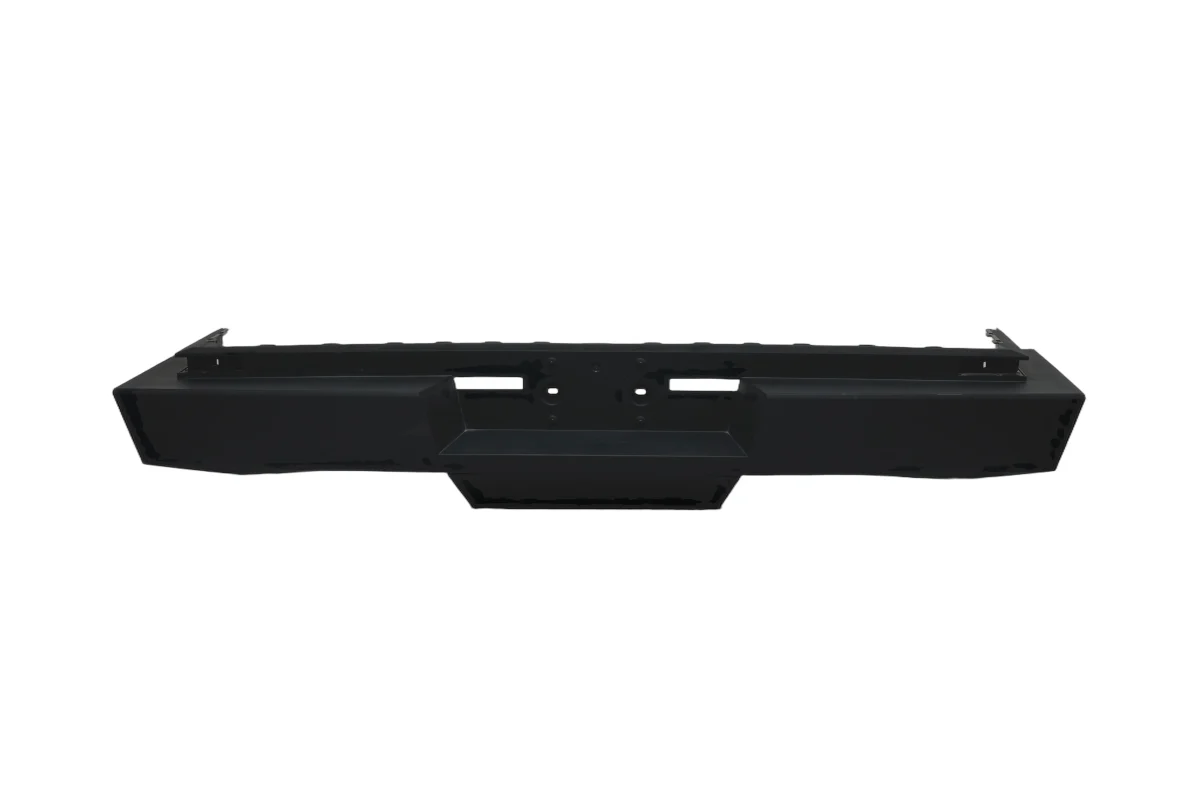
Because the Cybertruck’s exoskeleton body is unpainted stainless steel with black composite fascia sections front and rear, colour matching isn’t the concern it would be on a conventional painted bumper. The concern is fitment: sensor housings, tow points, tail light interfaces and the step brackets underneath all need to line up precisely with the rest of the rear assembly. Quoting the OEM number against the vehicle before purchase avoids the common mistake of ordering a fascia that’s correct for the model but wrong for a mid-cycle running change.
It’s also worth checking the condition of the mounting hardware and brackets behind the old fascia before the new one goes on. On a vehicle this new, most of what comes off a Cybertruck after an impact is still in reasonable shape, but sand ingress around clips and fasteners in the UAE can make removal harder than expected, and it’s easier to budget for replacement clips upfront than to discover a snapped mount mid-installation.
Rear-End Bodywork Beyond the Fascia
A rear bumper fascia rarely sits in isolation on a Cybertruck repair job. Rear fender flare arches, rocker panel trims and the tail light step brackets often need attention together, particularly after kerb strikes, off-road use or minor rear-end contact. Keeping these on one supplier’s list makes it easier to order a matched set rather than tracking down each panel from a different source.
Panels worth checking alongside a rear fascia replacement include the rear left fender flare arch moulding, the left and right side rocker panel lower body trims, and the rear tail light step brackets — all listed with their own OEM references so a workshop can confirm exact fitment for the 2024–2025 Cybertruck before committing to an order. Front fender flare arch mouldings with integrated camera housings are also worth checking if the front end was involved in the same incident, since Cybertruck’s camera-based sensing means a flare swap can affect more than bodywork alone.
Ordering these together rather than one at a time also reduces the number of separate delivery windows a workshop has to plan a job around, which matters when a vehicle is sitting on a lift waiting for the last panel to complete a repair.
Why Heat and Road Conditions in the UAE Matter Here
Dubai’s climate and road surfaces put specific stress on exterior bodywork that isn’t always accounted for in parts sourced for other markets. Sustained high temperatures affect how composite fascia panels expand and seat against their mounts, fine sand works into gaps around trim edges and clips, and the mix of highway speeds with tight urban parking means kerb contact on rear corners is common. None of this changes the part number you need, but it does mean fitment tolerances that are marginal in a cooler climate can show up as rattles, gaps or panel misalignment once a Cybertruck has spent a few months on UAE roads.
This is one reason we quote part numbers rather than generic descriptions across the catalogue — a fascia or trim piece that’s technically the right shape but the wrong revision can leave small gaps that let in dust and moisture over time, which is a bigger issue here than in more temperate markets. Regular inspection of fascia edges and rocker trim seams after long summer drives is a simple habit that catches this early, before a small gap turns into a loose panel.
Sourcing Across Marques Without Losing Fitment Accuracy
The same principle that applies to Cybertruck rear bodywork applies across the rest of the catalogue. Whether it’s a bumper for a Mercedes-Benz, a diffuser for a Ferrari, or suspension components for a Range Rover, workshops and owners need the same thing: a confirmed OEM reference checked against the vehicle before the part ships, not after. Reference material from the manufacturer’s own specification pages, such as Tesla’s official site, is useful for confirming model year details, but it won’t tell you which running change applies to a specific VIN — that check has to happen against the part number itself.
Stocking exterior bodywork for Mercedes-Benz, Rolls-Royce, Ferrari, Land Rover, Bentley, Lamborghini and Tesla under one system means a workshop handling a mixed fleet doesn’t need to relearn a new supplier’s part-numbering convention for every vehicle that comes through the bay. It also means restyling shops working across brands can plan a job around parts that are already confirmed against fitment, rather than discovering a mismatch after the panel arrives. For workshops referencing factory standards on other marques, sites such as Land Rover’s official site can help confirm generation and trim details before an order is placed.
Before You Order a Rear Fascia or Matching Trim
A few checks before placing an order save time on any rear-end bodywork job:
- Confirm the vehicle’s build date and any known running changes against the OEM part number, not just the model year
- Check whether related panels — fender flares, rocker trims, tail light brackets — were affected by the same impact and should be ordered together
- Note any camera or sensor housings integrated into fender or fascia panels, since these affect fitment and wiring routing
- Inspect mounting clips and hardware behind the old panel, particularly on vehicles that have seen regular sand or heat exposure
- Ask for the part number in writing before committing, so it can be checked against the vehicle’s own records
If you’re unsure which reference applies to your Cybertruck, or you’re pricing out a full rear-end repair that includes fascia, flares and rocker trim together, it’s worth talking through the fitment details before ordering rather than after. You can reach our team through our Dubai contact page, and background on how the catalogue is organised across marques is on our about page.
